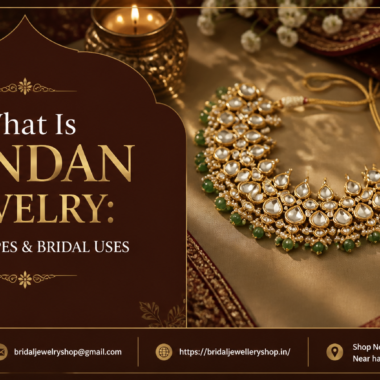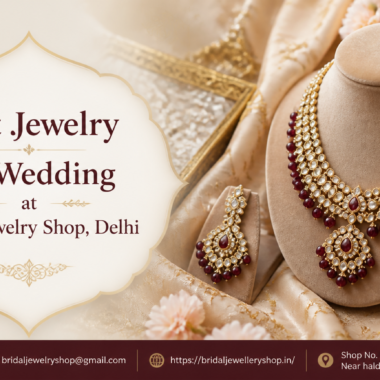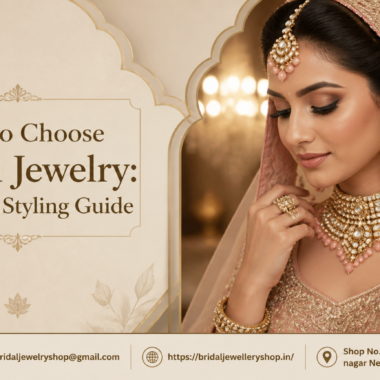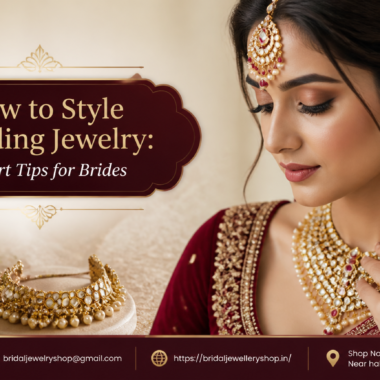
Quick answer: The defining bridal jewelry trend of 2026 is layering — stacking two or three Polki (uncut diamond) necklaces of different lengths instead of wearing one single necklace, then completing the look with a matching mang tika, chandbali earrings, and a statement kada. After a few seasons of minimal bridal jewelry, 2026 is bringing back the full, regal bridal set, just styled with more intention than before. Bridal Jewelry Shop in Malviya Nagar, New Delhi, stocks the Polki, Kundan, and Indian ethnic pieces this look is built from, and also offers them on rent for brides who want the complete layered set without buying every strand outright.
What Is the Layered Polki Necklace Trend?
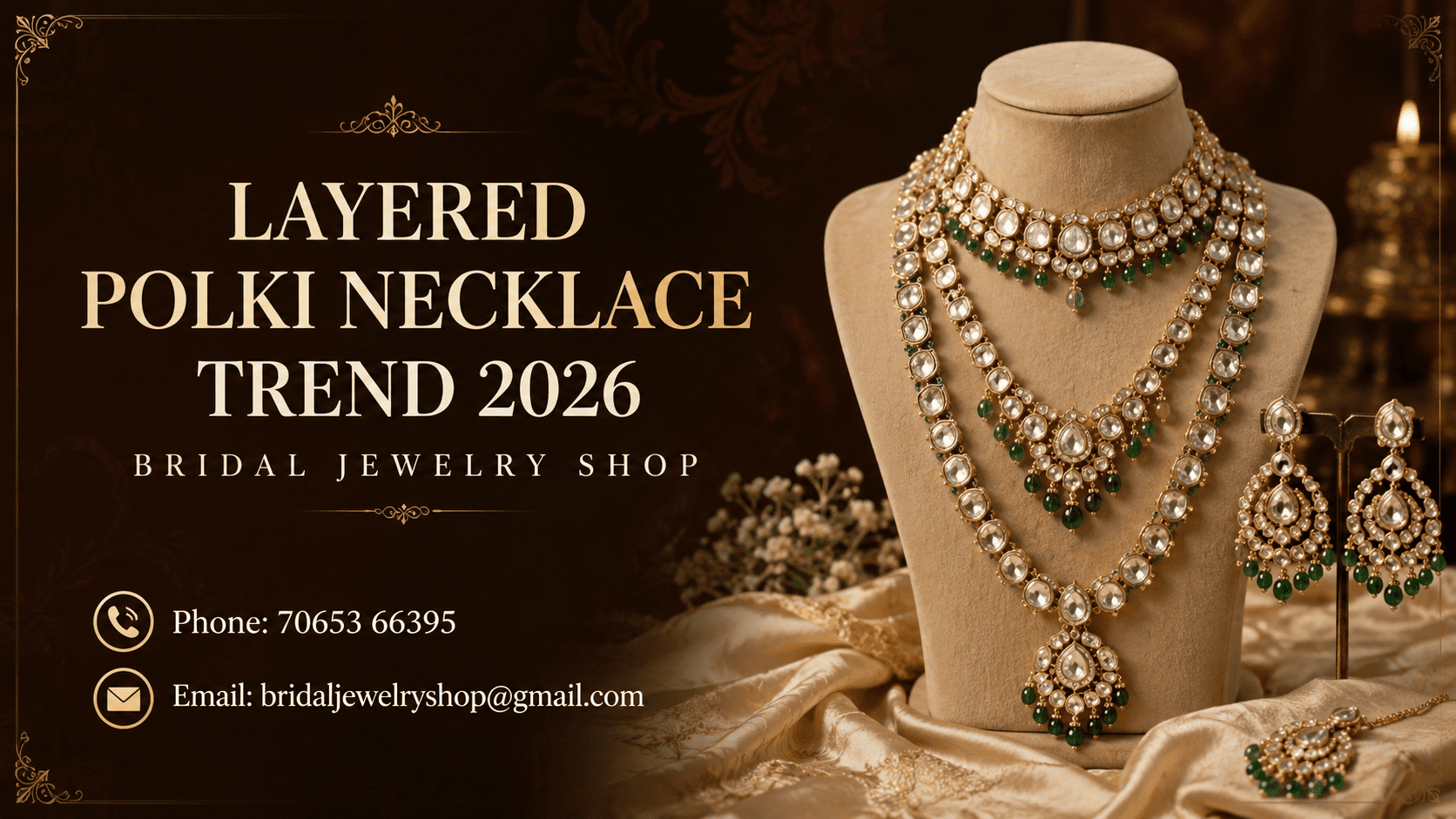
Layering, in bridal jewelry terms, means wearing two or more Polki necklaces of different lengths together — usually a close-fitting choker paired with one or two longer strings — instead of choosing a single necklace to match the lehenga’s neckline. The neckline becomes a canvas for multiple pieces worn at once rather than a slot for one “hero” necklace.
This isn’t the same as piling on extra jewelry. Each strand has a specific job: the choker sits high and frames the face, a mid-length piece fills the chest, and a longer string adds movement and softens the overall density. Done well, it reads as rich and considered rather than cluttered — which is the whole point of 2026’s shift back toward maximalism.
Why Is This Trend Taking Over 2026 Weddings?
For the past few wedding seasons, “less is more” was the dominant approach to bridal jewelry — one statement piece, minimal layering, jewelry that stayed quietly in the background of the outfit. 2026 is reversing that. Full bridal sets — necklace, choker, mang tika, earrings, and bangles all worn together as one coordinated look — are replacing the single hero-piece approach.
A few things are driving the shift:
- Photography is now central to bridal styling. Wedding photography and reels have turned bridal jewelry into a focal point in its own right, not just an accessory to the outfit. Layered necklaces simply photograph with more texture and depth than a single chain.
- Sets are being designed for re-wear. Pieces with detachable or separable strands let a bride wear the full layered look for the main ceremony, then break the same set into a single choker or necklace for a different function — getting more use out of the same jewelry across a multi-day wedding.
- It’s a return to how Polki was traditionally worn. Polki, being hand-set and uncut, has historically lent itself to elaborate, layered bridal sets. In many ways, 2026’s trend is less a new invention and more a return to Polki’s roots after a minimalist detour.
- Color is creeping back in. Alongside the layering trend, colored gemstone accents — emerald and ruby in particular — are showing up more in bridal sets. A layered Polki set with one emerald-accented strand is a common way brides are bringing in color without abandoning the classic Polki base.
How Do You Layer Polki Necklaces the Right Way?
Layering well comes down to proportion and restraint in the right places, even though the overall look is “more.” A few principles worth following:
- Stick to one metal tone. Mixing a gold-tone Polki piece with a silver-tone one breaks the cohesion of the look — keep every layered strand in the same finish.
- Vary the lengths on purpose. A choker, a princess-length piece, and a longer string create three distinct visual bands. Two necklaces of similar length stacked on top of each other tend to look heavy rather than layered.
- Let the heaviest piece sit lowest. The most elaborate or largest necklace usually anchors the bottom, with lighter strands layered above it, so the eye moves from delicate to dramatic.
- Echo the gemstone color across pieces. If the choker has emerald or ruby accents, repeat that color in at least one other layered strand or in the earrings, so the palette feels deliberate rather than mismatched.
- Match the rest of the set to the neckline’s weight. A heavily layered neckline pairs best with earrings that have real presence — like chandbalis — and one statement kada, rather than minimal studs and thin bangle stacks, which can look underdressed next to a maximalist neckline.
If you’re starting from scratch, a simple length formula to build from: a choker-length piece (roughly 14–16 inches), a princess-length piece (roughly 17–19 inches) as the middle layer, and an optional matinee-length string (20 inches or longer) for a third layer. These are standard necklace-length categories, so they work as a starting point regardless of which collection you’re choosing pieces from.
What Mistakes Should You Avoid When Layering Bridal Jewelry?
The layering trend is forgiving once you know the basic rules, but a few avoidable mistakes show up often enough to call out specifically.
- Choosing necklaces of nearly identical length. Two strands sitting at almost the same length bunch together instead of creating separate visual bands — the length difference between each piece is what makes layering read as intentional rather than accidental.
- Maxing out every category at once. A layered necklace, oversized chandbalis, a thick kada, and a heavy mang tika can absolutely work together, but only if at least one element stays restrained. Pick one or two pieces to be the loudest, and let the rest support them.
- Skipping a trial run with the actual blouse. A layered set can look different against a heavily embroidered blouse than it does on its own. Trying the full set against your actual bridal blouse and neckline before the wedding day avoids surprises in photos.
- Underestimating the weight. Multiple necklaces worn across a full day of wedding functions add up. It’s worth wearing the full set for an hour or two beforehand to check comfort, rather than only trying it on briefly in front of a mirror.
Completing the Set: Mang Tika, Chandbali Earrings & Statement Kada
A layered Polki necklace rarely stands alone in 2026’s bridal styling — it’s typically one part of a fuller, coordinated set. Two pieces show up consistently alongside it this season.
Chandbali earrings. The crescent-shaped chandbali has moved from a classic option to a near-default pairing for a layered Polki neckline. Its drop length balances the visual weight of a stacked necklace, and oversized chandbalis in particular are being styled with both traditional lehengas and lighter, pastel reception outfits.
A statement kada. Where bridal bangle stacks used to lean delicate and numerous, 2026 favors fewer, bolder pieces — a single wide Polki-embedded kada on each wrist rather than a dozen thin bangles. This “wrist-first” styling follows the same maximalist instinct as the layered necklace: fewer individual pieces, each one doing more visual work.
A mang tika or mathapatti finishes the set by drawing the eye upward, balancing all that weight at the neckline and wrists with a focal point at the hair parting. Bridal Jewelry Shop’s Indian ethnic jewelry collection covers all of these pieces — Polki necklaces, Kundan jewelry, mang tika, mathapatti, sheesh patti, hathphool, and kada — sourced from artisans across India, including Jaipur, Kutch, Banaras, and Hyderabad, with only one piece of each design kept in stock. That makes it possible to build a coordinated, layered set from a single collection rather than matching pieces across several stores, and means a set built here won’t turn up on another bride’s neckline at the same wedding.
Adapting the Layered Look Across Wedding Functions
A full layered set doesn’t have to be worn the same way at every event of the wedding. Since most multi-strand sets separate into individual pieces, the same jewelry can be styled differently across a multi-day wedding instead of sitting unused after the main ceremony.
For haldi or mehndi, most brides skip the heavy layered look entirely — these are daytime, more casual functions, and a single simple piece (or no necklace at all, if the outfit has a heavy neckline of its own) usually fits better than a full set. For the sangeet or another pre-wedding function, a lighter version works well: the choker alone, or the choker with just one shorter strand, paired with simpler earrings, keeps the look festive without competing with a less formal outfit. The wedding day itself is where the full layered set, mang tika, chandbalis, and kada come together as one complete look. For the reception, some brides swap the Indian ethnic pieces for something from a Western range entirely — a statement pendant or a pair of sculptural earrings — especially if the reception outfit is a gown rather than a lehenga. Treating one set as several adaptable looks, rather than one outfit’s worth of jewelry, is part of what makes the investment in a layered set worth planning around carefully.
How Do You Care for a Layered Polki Necklace Set?
A layered set involves more pieces in contact with skin, hair, and clothing over a longer day, so a little care goes a long way toward keeping each strand looking sharp through every wedding function.
- Put jewelry on last. Apply perfume, hairspray, and any skincare products before putting on your necklaces, not after — these can dull the foil backing and stone settings used in Polki and Kundan pieces over time.
- Store each strand separately. Lay multiple necklaces flat in a fabric-lined box or individual pouches rather than letting them tangle together in one box, which can scratch delicate settings and stress the stringing.
- Keep it dry. Polki and Kundan settings are traditionally lac-filled and foil-backed rather than fully enclosed, so they’re more sensitive to water and humidity than plain metal jewelry — wipe with a soft, dry cloth only.
- For pieces you keep, store away from direct light. If you’ve bought a piece you plan to wear again, prolonged direct sunlight can affect foil-backed stones over years of storage — a dark drawer or jewelry box works better than open display.
- Renting takes most of this off your plate. If you’ve rented your layering pieces, mang tika, or kada rather than buying them, the day-to-day care above is largely handled for you once the set goes back after your event.
Should You Buy or Rent a Layered Bridal Set?
A fully layered look means multiple necklaces, a mang tika, statement earrings, and a kada — considerably more jewelry than a single necklace purchase. That gap is exactly why bridal jewelry rental has grown alongside the layering trend: it lets a bride wear the complete maximalist set for her wedding events without buying every individual strand outright.
| Buying outright | Renting for the wedding | |
|---|---|---|
| Best for | One piece you’ll keep and re-wear, such as a single Polki or Kundan necklace | Completing the full layered look — extra necklaces, mang tika, kada — for events you’ll dress for once |
| What you get | A permanent addition to your jewelry collection | Access to a more elaborate, complete set than you might otherwise buy |
| Good to pair with | A piece with everyday or repeat-occasion versatility | A specific function — wedding day, sangeet, reception |
Bridal Jewelry Shop’s jewelry rental service covers bridal sets in two price bands — ₹2,000–5,000 and ₹6,000–12,000 — for a rental window of 2 to 7 days, with delivery available across India. The shop also rents lehengas, so it’s possible to put together a fully rented wedding-day look — outfit and layered jewelry together — through the same shop if that fits your plans better than buying. A practical middle path many brides take is buying one piece they’ll want long-term, like a single Polki or Kundan necklace, and renting the additional layering pieces, mang tika, and kada just for the wedding. Since every piece is stocked in a single design, call +91-7065366395 ahead of your date to check availability and confirm current rental terms.
Where Can You Find Layered Polki Necklace Sets in Delhi?
Bridal Jewelry Shop is located in Malviya Nagar, New Delhi, and carries the full range this trend is built around: Polki Necklace and Kundan Jewelry as the foundation layers, Diamond Necklace and Bridal Jewelry pieces for the choker layer, and Mang Tika, Mathapatti, Sheesh Patti, Hathphool, and Bangles/Kada to complete the set. For brides who also want a Western-styled piece in the mix — a pendant or a pair of statement earrings for a reception look — the shop’s Western Imported Jewelry range by Bling Belle, sourced from ateliers across Europe, the Middle East, and Asia, covers that too.
The store is open daily from 11:00 AM to 8:00 PM. Reach the team at +91-7065366395 or info@bridaljewelleryshop.in, or follow @bridaljewelleryshop on Instagram for new arrivals.
Frequently Asked Questions
Is the layered necklace trend only for Polki jewelry?
No. Polki suits layering especially well because of its handcrafted, uncut-diamond look, but the same principle works with Kundan jewelry, temple-style gold pieces, or pearl strands. The key is varying the length of each piece and keeping the metal tone consistent across all of them.
How many necklaces should I layer for my wedding?
Two or three is a balanced range to work with — typically a choker, a mid-length piece, and optionally one longer string. Beyond three, the look can start competing with the rest of the outfit, especially against a heavily embroidered lehenga.
What’s the difference between Polki and Kundan jewelry?
Polki uses uncut, naturally faceted diamonds set in gold, while Kundan traditionally uses glass or stone settings framed in gold foil rather than diamonds. Both are layered the same way for this trend, and many bridal sets combine both techniques in a single piece.
Can I rent just the extra necklaces and buy my main piece?
Yes, and it’s a common approach. Many brides buy one necklace they want to keep long-term — a Polki or Kundan piece — and rent the additional layering strands, mang tika, and kada specifically for the wedding day.
Does a layered set work with a simple lehenga?
Yes — in fact, it’s often recommended for simpler or less embellished lehengas, where the jewelry becomes the more elaborate, eye-catching element of the look instead of competing with heavy embroidery.
Can a layered necklace be worn with a saree instead of a lehenga?
Yes. A choker paired with one longer strand works well with a saree blouse too, particularly a sleeveless or boat-neck blouse that leaves enough of the neckline open for multiple strands to sit visibly.
How far in advance should I book rental jewelry?
Since each piece is stocked in a single design rather than mass-produced, it’s worth calling +91-7065366395 to check availability and reserve your set well ahead of your wedding date rather than waiting until the final week.
A layered Polki necklace set takes more planning than a single necklace purchase, simply because it depends on getting several pieces right together rather than one. Visit Bridal Jewelry Shop in Malviya Nagar, or call +91-7065366395, to put together a layered, maximalist set for your wedding — whether that means buying a centerpiece necklace to keep or renting the full set for the day.