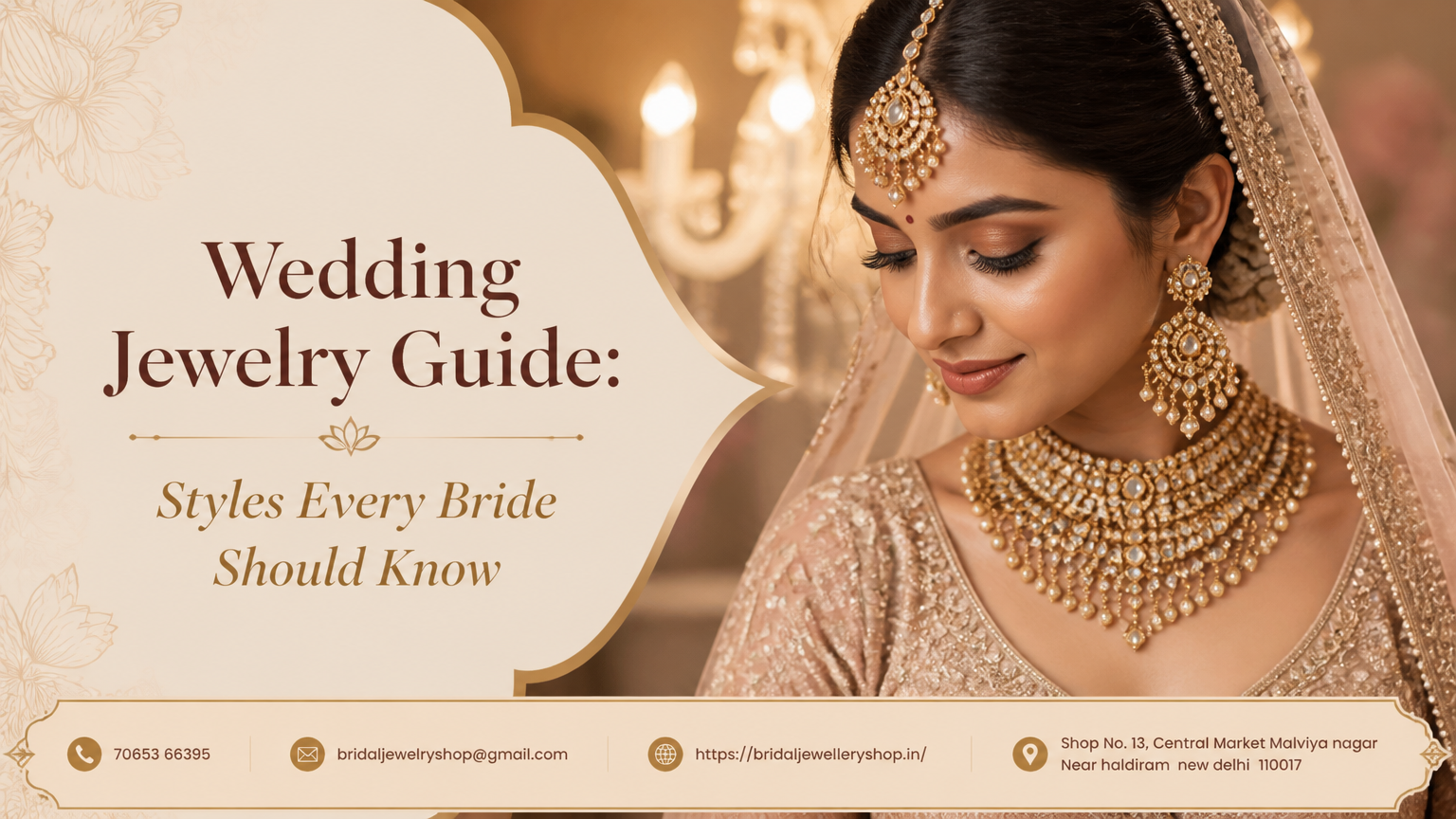
Wedding Jewelry Guide 2026: Styles Every Bride Should Know
Planning a wedding means juggling a hundred decisions, but few feel as personal as picking your wedding jewelry. The lehenga, the venue, and the makeup all get attention, but the pieces a bride wears carry centuries of cultural meaning, family stories, and individual style. At the same time, modern brides are navigating more choices than ever across functions, regional traditions, and budgets, often without clear guidance.
This guide gives you that guidance. It maps the major wedding jewelry styles every bride should know, walks you through a function-by-function Indian bridal jewelry plan, decodes 2026’s biggest bridal trends with fresh data, and helps you decide whether to buy, rent, or borrow each piece. For a starting point, you can explore a curated bridal jewelry collection that brings together Indian ethnic and contemporary designs under one roof.
TL;DR / Quick Answer
Wedding jewelry in 2026 is a layered, intentional wardrobe decision rather than a single set pulled from a vault. The strongest bridal looks combine traditional Indian craftsmanship (kundan, polki, temple, and meenakari-inspired pieces) with at least one contemporary statement piece for the sangeet or reception. Before buying, plan function-by-function, set a realistic budget across all events, and decide whether buying, renting, or borrowing fits your lifestyle best.
Table of Contents
- The Cultural Heart of Indian Wedding Jewelry
- Types of Wedding Jewelry: A Complete Style Breakdown
- Regional Style Map: How Indian Bridal Jewelry Varies Across India
- Wedding Function-by-Function Jewelry Guide
- Modern Brides: Lightweight, Layered & Contemporary Trends in 2026
- Buying vs Renting vs Borrowing: Your Smart Decision Framework
- Matching Jewelry to Your Face Shape, Outfit & Budget
- Frequently Asked Questions
The Cultural Heart of Indian Wedding Jewelry
Indian wedding jewelry is never just ornament. It is a language. For centuries, pieces like the mang tikka, nath, hathphool, and chooda have signaled marital status, family lineage, regional identity, and even prosperity. In many North Indian communities, gold jewelry historically doubled as a woman’s financial security, a wearable savings account passed from mother to daughter. South Indian temple jewelry, with its chiselled depictions of deities and motifs inspired by temple architecture, served a more devotional purpose, blessed during the wedding and worn across a lifetime of festivals.
Modern brides still inherit that emotional weight, even when they choose fashion bridal jewelry over fine pieces. The difference now is flexibility. Today’s bride can honor tradition with a polki-style choker, then swap it for an American-diamond statement piece at the reception without breaking cultural or aesthetic code. Designers across the country are responding by blending heritage techniques with lighter bases, more comfortable fits, and modular sets that mix across functions.
For brides researching their options, it helps to understand the regional vocabulary before falling in love with a specific design. Knowing whether a piece draws from Mughal, Rajasthani, Maharashtrian, Bengali, or South Indian roots changes how it photographs, how it pairs with your outfit, and how it feels during a six-hour ceremony. The next section breaks down the major style families so you can shop with intention rather than impulse.
Types of Wedding Jewelry: A Complete Style Breakdown
The Indian bridal jewelry market is built on a handful of signature techniques, each with its own visual language and price reality. Understanding the differences helps you mix and match with confidence rather than confusion.
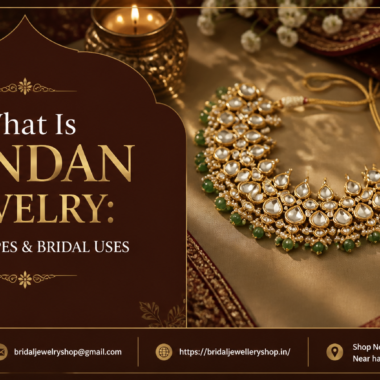
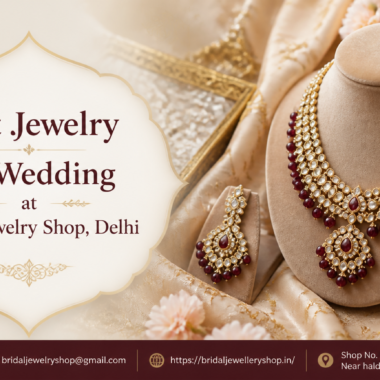
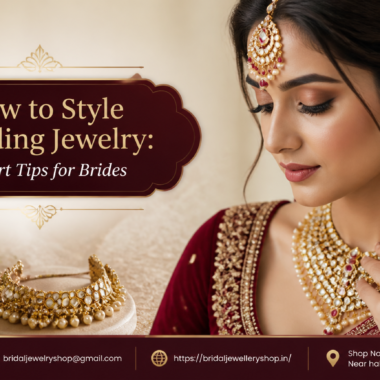
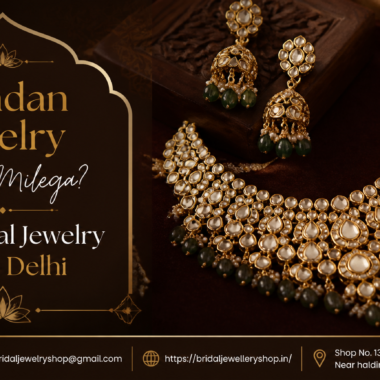
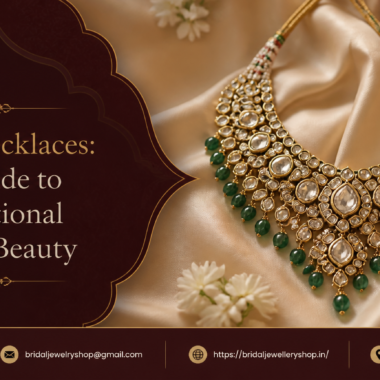
Kundan is the most photographed of the lot. It uses refined gold foil set behind uncut-diamond-inspired glass stones, often paired with enamel meenakari work on the reverse. The look is bold, regal, and unmistakably Mughal in feel. Polki shares the uncut-diamond-inspired aesthetic but uses a different setting technique, giving a slightly softer, more layered look that brides often choose for daytime ceremonies. Temple jewelry, rooted in South Indian craftsmanship, features deity motifs, lotus and peacock designs, and chunky gold-finish silhouettes that pair beautifully with Kanjeevaram silk.
Antique-finish jewelry has become a favorite for brides who want a vintage feel without heirloom prices. These pieces use darkened gold-tone metal to mimic old heirlooms, often with a kundan or polki-inspired centerpiece. American diamond (CZ) sets are the practical workhorse of contemporary bridal looks, offering diamond-like sparkle in lighter, more comfortable settings, perfect for the bride who wants to dance at her sangeet without neck pain. If you are building a complete bridal wardrobe, browse a well-organized Indian ethnic jewelry collection that lets you see these styles side by side. Most brides end up with one heritage-style set for the main wedding and one or two lighter pieces for the supporting events.
Regional Style Map: How Indian Bridal Jewelry Varies Across India
Geography shapes bridal jewelry more than any single trend forecast. Walking into a Punjabi wedding versus a Bengali one versus a Tamil ceremony feels like walking into a different country. The pieces, motifs, and even the way they are layered tell a story about the family, the community, and the climate the bride grew up in.
North Indian bridal jewelry, especially Punjabi and Rajasthani styles, tends to be heavy, layered, and maximalist. Think chooda (red and ivory bangles), rani haars (long layered necklaces), kaleere, and mathapattis paired with bright red or maroon lehengas. South Indian bridal jewelry pulls from temple architecture, with idols of Lakshmi, intricate goddess motifs, and gold-finish pieces that catch temple light beautifully. Bengali brides are known for the mukut (crown), shakha pola (conch and coral bangles), and a distinct preference for red and white paired with traditional conch-shell pieces. Maharashtrian and Goan weddings lean on the mundavalya (pearl string across the hair parting), green glass bangles, and kolhapuri saaj-inspired pieces. Eastern and Western Indian styles, from Gujarati to Maharashtrian to Kashmiri, add yet more regional vocabulary, including floral jhumkas, haath phools, and tikka variations.
The smartest modern approach is not to copy one region but to honor your own. Use the regions as inspiration, then mix pieces that feel authentic to your family’s traditions and your personal style. A Bengali bride might pair her traditional mukut with a contemporary polki-style choker for the reception, while a Punjabi bride can swap a heavy rani haar for a layered American-diamond set at the sangeet.
Wedding Function-by-Function Jewelry Guide
Most Indian weddings are not a single event but a series of functions, each with its own mood, outfit, and lighting. Your wedding jewelry plan should match that rhythm rather than try to wear the same heavy set to every event.
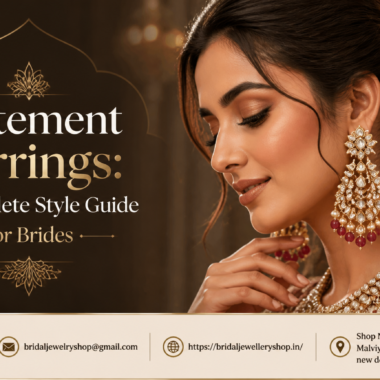
Mehendi and haldi are the daytime, often outdoor events where you want comfort, color, and pieces that photograph well against the henna. Lightweight floral jhumkas, a delicate maang tikka, and pastel stone bracelets work beautifully. Save the heavy neck for later. Sangeet is the performance night, and the jewelry can get playful: statement chandbalis, layered chains, and bold earrings like the Royal Dragon Drop style that move well when you dance.
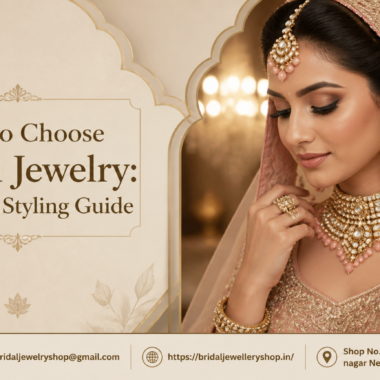
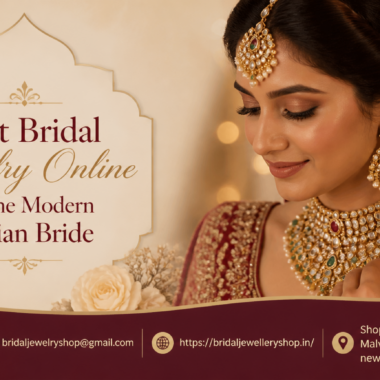
The main wedding ceremony is where heritage jewelry earns its place. This is the moment for the kundan or polki-inspired choker, the rani haar if your family tradition calls for it, the mathapatti, and the nath. Keep the metal weight manageable and the stones secure, because the ceremony can run for hours. Reception is the final look, and it is your chance to bring in modern sparkle. A sleeker American-diamond set or a contemporary statement necklace lets the evening light do the work. If you want to see how these styles layer across functions, a single shop that organizes complete wedding jewelry collections by occasion makes planning far easier than piecing together looks from scattered vendors.
Modern Brides: Lightweight, Layered & Contemporary Trends in 2026
The biggest shift in wedding jewelry for 2026 is not a single trend but a mood: lighter, layered, and more personalized than the heavy-uniform sets of the past. Brides today want to feel comfortable enough to dance, eat, and actually enjoy their own wedding rather than stand stiffly under a ten-kilo necklace.
Real data backs this up. The Knot’s Real Weddings Study 2026, covering 10,474 U.S. couples married in 2025, found that lab-grown center stones now account for 61% of all engagement ring purchases, a 239% jump since 2020, with average stone sizes growing to 1.9 carats while average spend dropped to around $4,600. The same logic is shaping Indian bridal jewelry: brides want more visual impact per rupee spent. BriteCo’s 2025 Lab-Grown vs. Natural Diamond Report also found that tennis bracelets grew 240% to nearly 12% of diamond jewelry sales, as lower lab-grown prices democratized pieces once considered luxury. That trend translates directly into Indian bridal sets, where American-diamond and CZ bracelets are now standard at sangeets and receptions.
Vogue, citing Pinterest’s 2025 Wedding Trends Report, found that searches for 1920s-style vintage engagement rings rose 1,458%, while pink diamond and sapphire searches jumped 349% and 328%. Pinterest also reported a triple-digit surge in mixed-metal stacks, the Layered Luxe trend of fine gold chains paired with diamond details, and a pearl revival in modern minimalist settings. For a contemporary bride, exploring Western imported jewelry for sangeet and reception looks opens up exactly this kind of mixed-metal, layered aesthetic that still feels bridal without feeling heavy.
Buying vs Renting vs Borrowing: Your Smart Decision Framework
Few decisions save or cost a bride more than the buy-rent-borrow choice. Each option has a clear use case, and most smart brides end up using all three.
Buying makes the most sense for pieces you will genuinely wear again: the go-to pair of statement chandbalis, a polki-inspired choker that works for future family weddings, or a comfortable American-diamond set that transitions into anniversary dinners. Renting is the smart move for the dramatic, single-event pieces: the heavy rani haar, the heritage mathapatti, or the high-impact reception necklace. You wear it beautifully for one night without the storage headache. Borrowing from family carries unmatched emotional value, but it also means being careful with cleaning, insurance, and fit.
A practical framework is to spend roughly 60% of your jewelry budget on pieces you will own, 30% on rental for hero event pieces, and leave a 10% buffer for last-minute additions. Brides who want a flexible middle ground often rent from a curated shop that offers both purchase and rental, like a wedding jewelry rental service that bundles bridal sets and makes both options easy to compare. Always confirm rental timelines, security deposits, and cleaning policies before booking. For more long-term planning guidance, the bridal jewelry blog section covers ongoing care and storage tips that apply to both bought and inherited pieces.
Matching Jewelry to Your Face Shape, Outfit & Budget
The final layer of choosing wedding jewelry is making sure each piece flatters you personally, not just the mannequin it was styled on. Face shape matters more than brides expect. Round faces benefit from longer chandbalis and vertical drops; oval faces can carry almost any style; heart-shaped faces are softened by wider chokers and shorter jhumkas; square faces are balanced by rounded designs and curved necklaces.
Outfit color and embroidery density should also guide your choices. A heavily embellished lehenga needs lighter, simpler jewelry so the look does not compete. A pastel or minimal outfit invites bolder pieces. Neckline decides neckpiece length: deep V-necks call for long rani haars, high necks pair best with chokers, and sweetheart necklines work with both. Budget-wise, the most realistic Indian bridal jewelry range in 2026 spans from ₹50K for a thoughtful mix of buy-and-rent pieces, to ₹2–5 lakh for a fuller wardrobe with one major heritage set, to ₹10–15 lakh+ for brides building a family heirloom collection.
If you want a tailored recommendation rather than a guess, the strongest move is a personal styling session. A quick appointment at a Delhi showroom where you bring your actual outfits and try pieces in person removes most of the uncertainty. You can book a styling consultation at the Malviya Nagar showroom, and for a deeper dive into the brand’s design philosophy and heritage, learn about the Delhi-based team behind Bridal Jewelry Shop.
Conclusion
Wedding jewelry in 2026 is ultimately a personal, layered, and deeply meaningful decision. The styles every bride should know, including kundan, polki, temple, antique-finish, and modern American-diamond sets, give you a vocabulary, but the real art is matching those styles to your functions, your face, your outfit, and your budget. Plan function by function, lean on rental for hero pieces, and invest in the everyday-wearable items that will outlast the wedding day itself. When in doubt, a personal styling consultation is worth more than another hour of scrolling. Start your wedding jewelry journey with a curated collection that brings every style under one roof and gives you expert guidance from the first try-on to the final piece.
Frequently Asked Questions
What is wedding jewelry and which pieces are essential for an Indian bride?
Wedding jewelry refers to the coordinated set of ornaments a bride wears across her wedding functions, traditionally including a necklace, earrings, maang tikka, nath, bangles or chooda, and a hathphool. For Indian brides, essential pieces typically include one heritage-style set (kundan or polki-inspired), one lightweight contemporary set for sangeet and reception, and traditional accessories like mathapatti and nath that honor family customs.
How much should a bride budget for wedding jewelry in 2026?
A realistic Indian bridal jewelry budget in 2026 ranges from around ₹50,000 for a smart mix of purchase and rental to ₹2–5 lakh for a fuller wardrobe, and ₹10–15 lakh or more for heirloom-grade fine jewelry. Most modern brides split the budget roughly 60% on owned pieces, 30% on rental, and 10% as a buffer.
What is the difference between kundan and polki wedding jewelry?
Kundan uses refined foil settings behind uncut-diamond-inspired stones with a smoother, more uniform finish, while polki features a layered setting technique that gives a slightly softer, more textured look. Both styles are rooted in Mughal-era craftsmanship and remain core to traditional Indian bridal jewelry, with kundan often chosen for evening glamour and polki for daytime ceremonies.
Is renting wedding jewelry a good option in India?
Yes, renting wedding jewelry is a practical and increasingly popular option, especially for heavy heritage pieces that are worn only once. It allows brides to access premium kundan, polki, or temple-style sets at a fraction of the purchase price. Always confirm rental duration, security deposit, cleaning policy, and insurance before booking.
What wedding jewelry styles are trending for 2026 brides?
The defining 2026 bridal jewelry trends are yellow gold settings, Art Deco and vintage-inspired silhouettes, layered necklaces, statement chandbalis, tennis bracelets, and mixed-metal stacks. Pinterest’s 2025 Wedding Trends Report and BriteCo’s 2025 report both confirm that pearls, colored gemstones, and modular layered sets are reshaping modern bridal looks.
How do I choose wedding jewelry that matches my face shape and outfit?
Match earrings to face shape: chandbalis for round faces, statement studs for heart-shaped faces, and jhumkas for oval faces. Pair neckpieces to your neckline, longer rani haars for V-necks, chokers for high necklines, and choose simpler jewelry if your outfit is heavily embellished, or bolder pieces if the outfit is minimal.
Can I mix traditional and modern wedding jewelry in one look?
Absolutely. Mixing traditional and modern wedding jewelry is the signature of 2026 bridal styling. A common approach is to wear a heritage kundan or polki-inspired set for the main wedding ceremony and switch to a contemporary American-diamond or Western imported statement set for the reception, keeping the overall look balanced and event-appropriate.