Kundan vs Polki Which Is Better? Delhi Bridal Guide
Quick answer: Kundan-style jewellery wins on brightness and statement impact; Polki-style jewellery wins on soft, regal, antique-inspired elegance. For most brides, the smartest trousseau mixes both.
Choosing between Kundan and Polki is one of the most common dilemmas Delhi brides face, usually in the middle of a wedding shopping list that already includes the lehenga, the mang tika, the earrings and three or four sangeet looks. The confusion starts with naming: Polki refers to the stone style, Kundan to the gold-foil setting, and both often appear in the same piece, so the two are not really rivals. Both styles also trace back to the Mughal-era court jewellery tradition and the Jadau setting craft that shaped Indian bridal adornment. At Bridal Jewelry Shop, an in-store bridal and occasion-wear specialist in Malviya Nagar, New Delhi, the Indian Ethnic Jewellery range makes it easy to compare both looks in person, with personal styling advice, purchase options and jewellery on rent for Delhi NCR brides.
The Core Difference: Polki (The Stone) vs. Kundan (The Gold)
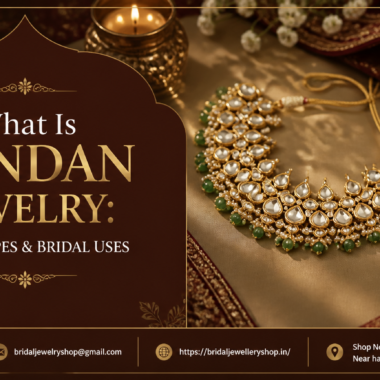
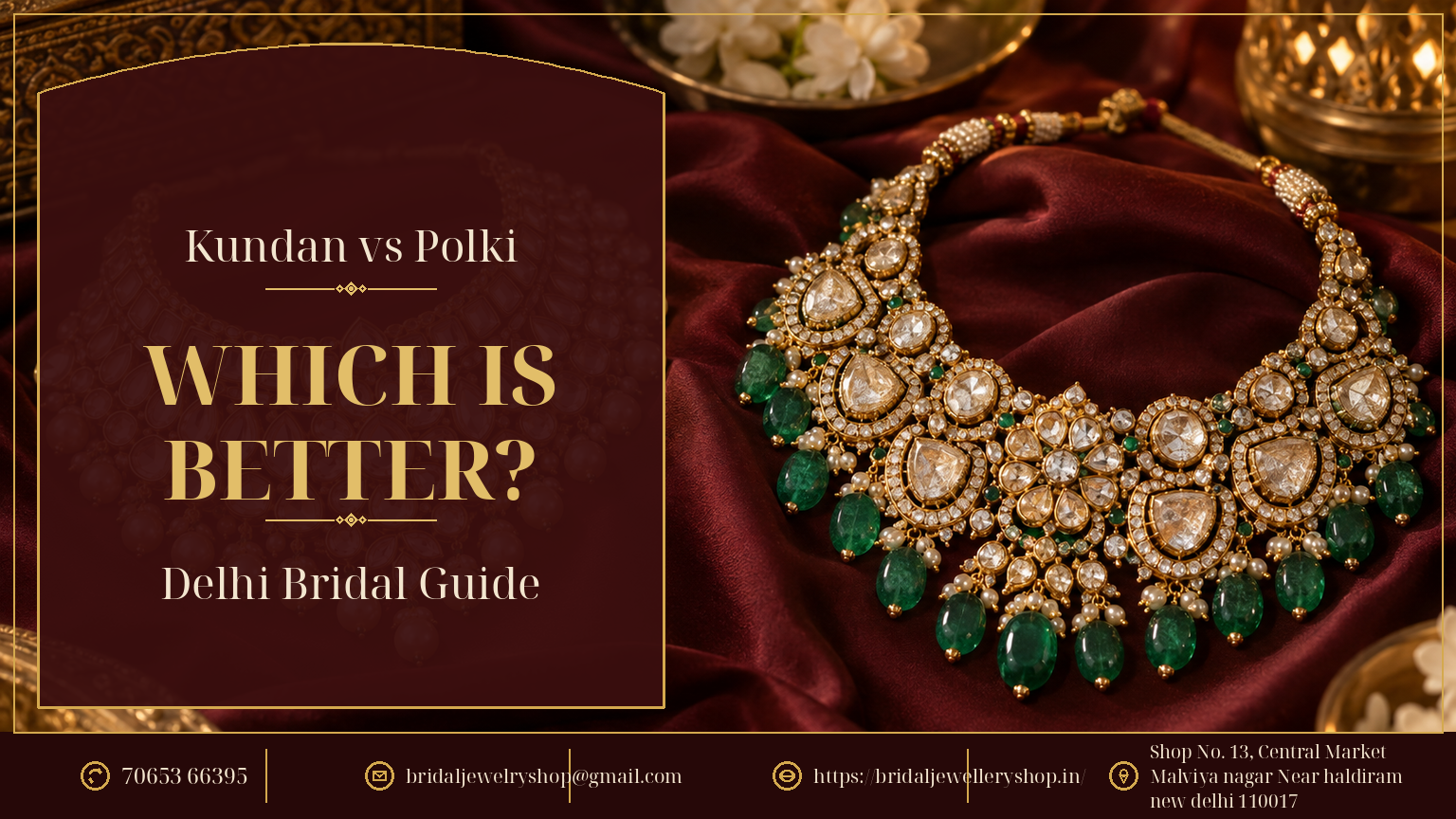
The first thing to clear up is the naming. Polki is really about the stone: a flat, uncut-diamond-inspired stone style with an irregular, antique character, set close to the metal so a piece reads as a continuous field of gentle sparkle rather than of sharp modern facets. Polki celebrates that irregular, natural character instead of trying to mimic a faceted, high-flash Western cut. Kundan is about the setting and the finish: a refined gold-foil style in which stones are backed and secured against a foil base, producing a warmer, denser, more luminous surface. Jadau is the broader craft term for that embedding technique, which is why the two words appear together so often in traditional Indian jewellery. A Polki-style stone can be set using a Kundan-style foil technique, so the two describe different parts of the same visual language rather than opposite ends of a spectrum.
For shoppers, the shortcut is simple. Polki means the softer, flatter, antique-inspired stone look; Kundan means the rounder, foil-backed, more radiant look. When a listing mentions kundan stones, it refers to the style of stone and setting used in that piece; when it mentions polki stones, it refers to the flatter stone style. Many bridal sets mix both in a single design, which is why asking which is better can be the wrong question. The right question is which combination suits your lehenga, your function, your comfort and your budget. At Bridal Jewelry Shop in Malviya Nagar, New Delhi, the Indian Ethnic Jewellery collection lets you see both finishes side by side, and the in-store team can match them to the outfits you actually plan to wear.
Material & Craftsmanship: Polki-Style Stones vs. Kundan-Style Foil Work
Every Indian ethnic bridal piece in the collection is fashion jewellery with kundan-style or polki-style stonework. That is the honest basis behind the royal look, and it is also the reason the collection suits real wedding budgets. Kundan-style work usually pairs rounder, brighter stones with a warm foil-backed setting, giving a denser, more luminous, as-seen finish across a necklace. Polki-style work uses flatter, uncut-diamond-inspired stones with a more irregular, antique character, so the sparkle scatters softly in daylight and photographs beautifully without looking heavy. Both families of pieces are designed to stay comfortable enough for a full wedding week, which matters more than most shoppers expect before trying on a heavy bridal set for the first time.
Craftsmanship differences show up in weight and comfort as much as in shine. Kundan-style sets carry more visual density, which makes them show-stopping against a heavily embroidered lehenga but can feel tiring across a long sangeet. Polki-style sets tend to sit flatter and lighter against the neck, which is why many brides choose them for the main ceremony and for the days they want jewellery to complement rather than compete with a heavily worked outfit. None of these designs are custom or made-to-order, so it pays to plan your trousseau around the exclusive collections currently in stock at the Malviya Nagar store. New arrivals are limited, and calling ahead about a specific design can save a wasted trip. The team can also suggest a lighter mix, such as a polki-style set for the ceremony paired with statement earrings for the evening.
The Price Gap Explained: Budget, Cost-Per-Wear and Rental Options
Price is where the choice becomes easiest to read. Polki-style bridal sets in the range are among the more accessible entries: the Noor Jahan Polki Bridal Set is on sale at Rs. 9,949 against an original price of Rs. 14,999, with limited availability. Kundan-style bridal sets sit slightly higher: the Zoya Emerald Kundan Bridal Set at Rs. 12,999 (original Rs. 18,500), the Meher Mint Kundan Bridal Set at Rs. 13,000 (original Rs. 18,000), the Rajkumari Pearl Kundan Bridal Set at Rs. 12,999 (original Rs. 18,000), and the Kundan Bridal Set at Rs. 14,000 (original Rs. 30,000). All of these sit in the Indian Ethnic Jewellery collection and are currently marked limited availability. Prices are shown in Indian Rupees on the site, and stock in this category moves quickly around wedding season.
Because bridal budgets are rarely unlimited, cost per wear beats sticker price. A set worn across the ceremony, the reception and a family function can work out cheaper per appearance than two lower-priced pieces bought in a hurry. The Jewellery on Rent collection adds another layer of flexibility: rentals are listed at Rs 2,000 to Rs 12,000 for a 2 to 7 day period, with bridal lehenga on rent available as well. Exact fee amounts are confirmed in store, so the practical step is to browse the Indian Ethnic Jewellery and Jewellery on Rent pages first, then talk it through in Malviya Nagar. For the wider range, Explore Indian Ethnic Jewellery online before you visit so your time in store is focused. Before confirming any purchase or rental booking, read the Terms and Conditions — the team serves Delhi NCR in-store with walk-ins welcome, and the site lists pan-India delivery for rentals.
Aesthetic Comparison: Subtle Warm Glow vs. Bright Mirror Shine
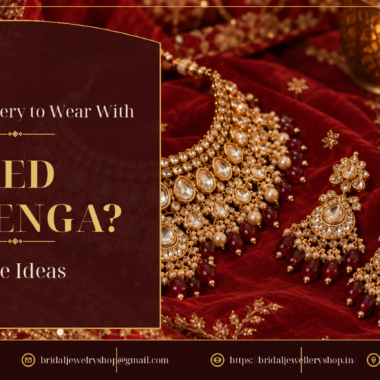
Think of the two styles as two moods. Polki-style jewellery delivers a soft, warm glow: the flatter, antique-inspired stones scatter light gently, so the finish looks calm, regal and timeless, almost like a piece borrowed from an old family album. It sits quietly against a heavily worked red or maroon lehenga, a pastel saree or a cream bridal ensemble, and it photographs beautifully without pulling attention away from your face, dupatta or mehndi. It also works beautifully in daylight, which is where most wedding photographs happen — the main ceremony, the vidai and the family portraits. For a bride who prefers the classic, understated-royal finish, Polki is usually the safer pick.
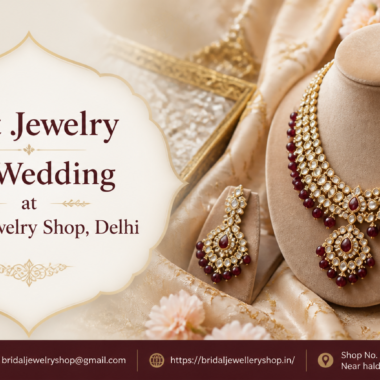
Kundan-style jewellery brings the brightness. Rounded, foil-backed stones create a mirror-like shine that catches camera flashes and evening lights, which is why Kundan-style sets remain the go-to for sangeet, mehendi and reception nights. At Bridal Jewelry Shop, the Maharani Kundan Chandbali at Rs. 2,800 (original Rs. 3,800) and the Royal Kundan Pearl Chandbali at Rs. 2,500 (original Rs. 3,600) are the quickest way to add that glow, while statement pieces such as the Ruby Cascade Statement Earrings at Rs. 2,000 (original Rs. 2,800) or the Royal Blue Pearl Cascade Earrings at Rs. 1,450 (original Rs. 2,200) carry the shine into receptions and festive events. Chandbali’s crescent shape also flatters most face shapes when worn at the maang tikha or jhumka position. If you want both moods in one trousseau, the most-loved Delhi pairing is a Polki-style bridal set with Kundan-style chandbali and pearl drops.
The Smart Bride’s Guide: When to Choose Polki vs. Kundan
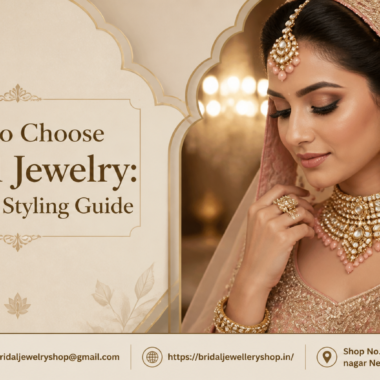
Choose Polki-style when your wedding look is soft, antique and regal — a muted pastel or ivory lehenga, light embroidery, or a timeless old-world aesthetic — and when you want a flatter, lighter set for the main ceremony. Choose Kundan-style when you want maximum sparkle for the camera and the dance floor, when your outfit is heavily embellished and needs matching brightness, and when you are building a complete look around one statement bridal set with matching earrings, mang tika and hathphool. Comfort matters too: if the set will be worn through a long function, go for the one you can forget you are wearing. And if you are undecided, bring the outfit to the store, because a side-by-side try-on settles the question faster than any description.
The smartest approach for a Delhi NCR bride is a mix. The Noor Jahan Polki Bridal Set for the ceremony, the Zoya Emerald or Meher Mint Kundan Bridal Set for the reception, and lighter or rented pieces for mehendi and sangeet. Add the curated Bling Belle Western imported line for the cocktail or after-party, where imported earrings, pendants, bracelets and rings give a contemporary finish that balances a traditional bridal look. Bridal Jewelry Shop keeps the whole edit under one roof in Malviya Nagar, New Delhi, and the in-store bridal styling consultation lets you bring your clothes and get one-on-one trend and matching advice from the team, such as jewellery consultant Vinni, with walk-ins welcome and Deepak on hand at the counter for browse-and-compare help. To plan your combination, Contact Us About Jewellery or call or WhatsApp +91-7065366395.
How to Verify Authenticity: Style, Materials and Seller Transparency
For this collection, authenticity means something different from fine jewellery. The Indian Ethnic Jewellery at Bridal Jewelry Shop is fashion bridal jewellery with kundan-style and polki-style stones, built for looks, wearability and budget, and not marketed as an investment piece. So the checks that matter here are simple and practical rather than laboratory-based: ask what the piece is made of, whether the plating and stones are even, whether the finishing is neat at the clasp and edges, and whether the seller explains the materials plainly. A good jeweller will describe exactly what you are buying without overclaiming, and will give you a clear material description rather than a fine-jewellery grading report. If a listing uses words like “gold” or “diamond”, read the material line carefully and do not hesitate to ask before you pay.
Seller transparency is the real trust signal. Bridal Jewelry Shop is a physical, in-store specialist at Shop No. 13 Main Malviya Nagar, New Delhi-110017, serving Delhi NCR with walk-ins welcome, and its homepage currently displays 98 Google reviews. Named team members such as jewellery consultant Vinni and shop representative Deepak are available in store to answer questions before you commit. Check the product listing for the stated material and price, read the Refund and Returns Policy and the Terms and Conditions, and keep your invoice and payment record for every purchase or rental booking. To understand how the business works, Learn More About Our Business. Two minutes of questions at the counter can prevent an outfit mismatch on the biggest day of the year.
Maintenance & Care: Keeping Your Bridal Jewellery Looking New
Gold plating and stone-set bridal pieces are made for occasion wear, and they reward a little care. The three enemies are perfume, water and friction. Apply perfume, hairspray and body lotion before you put your jewellery on, never after; keep sets away from the perfume counter and the sink; and take heavy pieces off before sleeping, since long hours of skin contact and sweat can dull the plating over time. Store every set separately in a soft, dry pouch or a lined box so that stones do not rub against the plating of other pieces. Keep the original packaging and listing details handy too, since they make any query about a piece much faster to resolve. For pieces rented for a wedding, the same routine applies on return, so they look their best for the next function.
For cleaning, stick to a soft dry or lightly damp cloth with mild soap. Skip chemical jewellery dips entirely, and never use a stiff brush on the stones or the foil-backed setting, since it can scratch the plating and loosen a setting. After a function, let the set air dry fully in a shaded spot before putting it away, and check the clasp and chain in good light. If a piece was worn through the wedding week, have a close look at it in store before the next reception or festival. A final wipe with a dry cloth before the family photos is often all it takes. For new arrivals and exclusive collections, browse the Indian Ethnic Jewellery page or visit the shop in person, and remember that limited designs do not always wait.
Conclusion
So, Kundan vs Polki which is better? If you want a soft, regal, antique-inspired finish that sits quietly under the spotlight, go Polki-style. If you want maximum brightness, statement impact and pieces that light up the dance floor, go Kundan-style. For most brides, the honest answer is both: one Polki-style set for the ceremony, Kundan-style sets and chandbali for the sangeet and reception, and a rental option for the remaining functions. The Indian Ethnic Jewellery range offers kundan-style and polki-style fashion bridal pieces, so you can try both looks side by side, get personal styling advice and choose to purchase or rent. Visit the Malviya Nagar store in New Delhi, walk in with your outfits, and let the team help you decide.