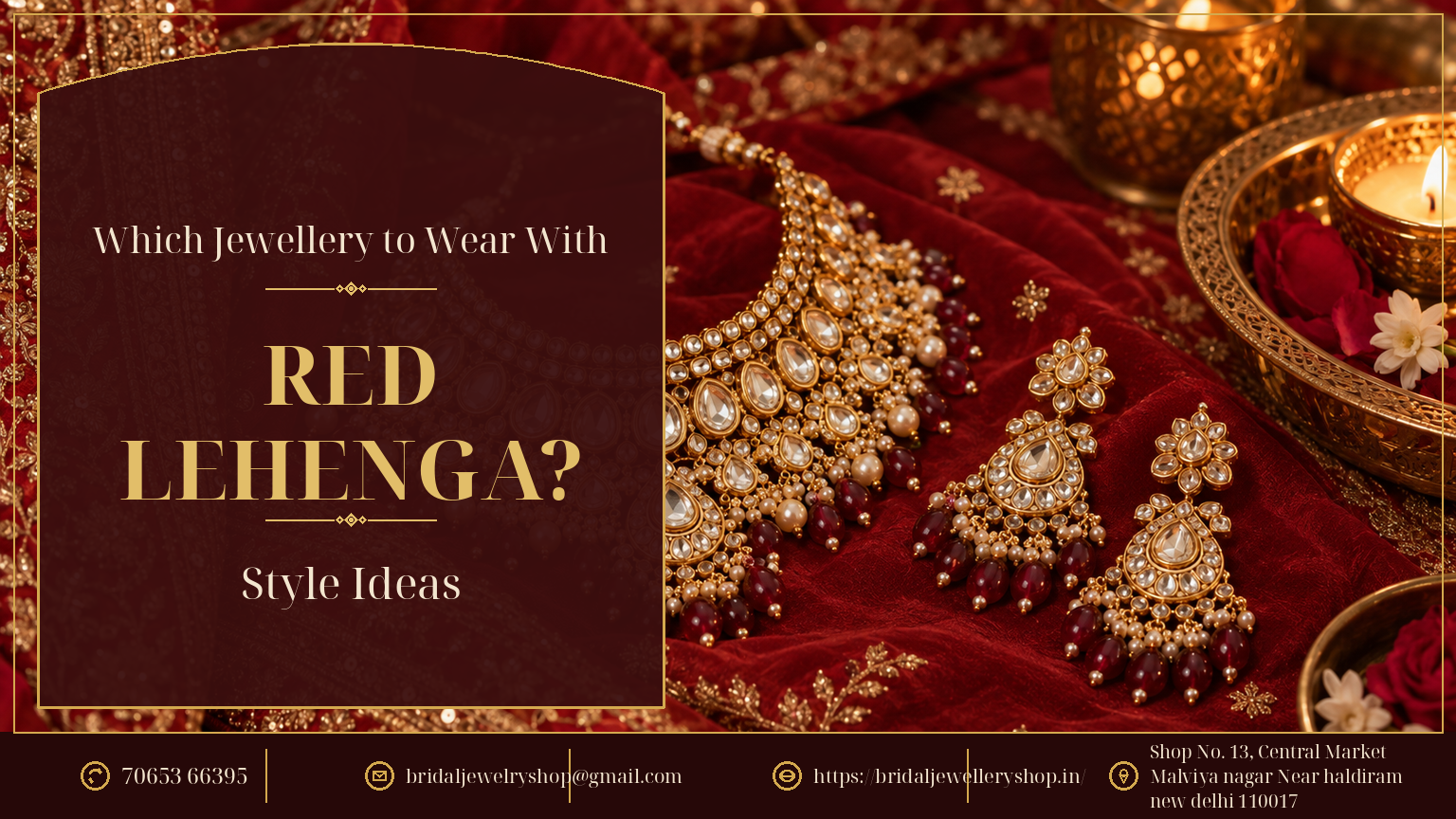
Which Jewellery to Wear With Red Lehenga? Style Ideas
Introduction: Why the Red Lehenga Demands the Perfect Jewellery
A red lehenga already carries colour, texture and occasion, so jewellery should support rather than compete. The best choice depends on the shade of red, your blouse neckline, embroidery, dupatta drape and your role—bride, wedding guest or festival guest. There is no single mandatory combination: a classic kundan or polki look, a contrasting pearl accent and a modern diamond-look piece can all work when their scale and colour are balanced.
Start with the lehenga in front of you, then decide whether you want a traditional bridal mood, a fresh contrasting look or a lighter festive combination. Bridal Jewelry Shop brings Indian ethnic pieces, Bling Belle Western jewellery and rental options together for personal styling guidance. Learn more through About Bridal Jewellery Shop, then use this guide to shortlist a direction before your visit.
Quick Match Matrix: Red Shade × Neckline × Jewellery Style
Think of the red shade as the first filter. Tomato or cherry red is bright and warm, so emerald-green accents, creamy pearls and antique-style gold tones create crisp separation. Crimson has enough depth for kundan or polki-style pieces to look rich without needing extra shine. Maroon suits muted gold-toned, pearl-led combinations, while brick or rust red can work with both traditional kundan and lighter copper-toned contrast pieces. The goal is not to label one shade “correct”: it is to choose jewellery whose colour temperature and visual weight sit comfortably beside the fabric. When two reds meet, compare them in daylight and at the distance your jewellery will be seen: the necklace should remain readable beside the blouse, not disappear into it.
Next, match the jewellery scale to the neckline: use a choker for a deep or broad neckline, a shorter layered haar for a square or sweetheart blouse, and a longer haar when the blouse is high-necked and simple. Add a statement maang tikka only when the centre of the head and dupatta have enough visual space. A useful quick match is emerald for tomato red, pearl for crimson, muted gold for maroon, and oxidised or pearl contrast for brick red. Before finalising, compare the jewellery with the complete look rather than the lehenga alone. A colour that looks vivid on fabric can become restrained beside a heavily embroidered blouse, while a small pearl accent may disappear under a dense dupatta border. If the embroidery already contains green, pearl or strong metallic work, repeat one accent rather than several, keeping the overall combination clear, comfortable and photographable. For a guest look, scale every recommendation down one level and let one accessory remain dominant.
1. Choose by Metal: Gold, Polki, Kundan, or Silver?
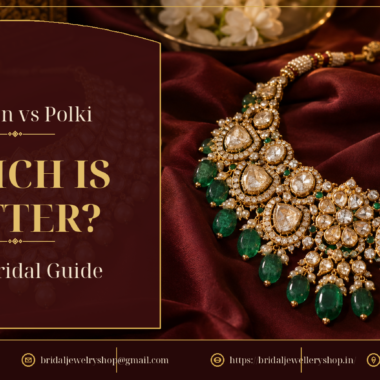
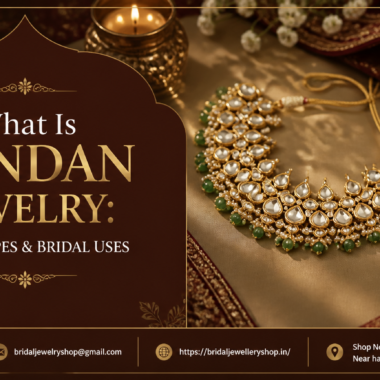
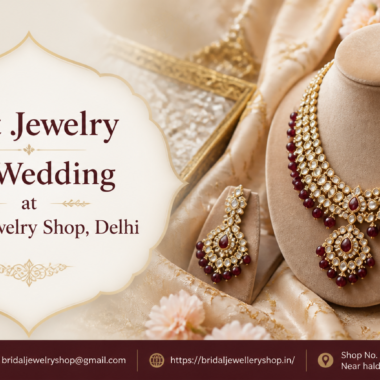
Gold, kundan and polki each create a different relationship with red. A warm gold-toned necklace echoes the richness of traditional embroidery, while kundan styling adds heritage character through its detailed surface. Polki styling offers an uncut-diamond-inspired look, especially effective when the lehenga has fine work rather than large motifs. Bridal Jewelry Shop’s Indian Ethnic Jewellery is fashion bridal jewellery in kundan-style and polki-style designs. The Zoya Emerald Kundan Bridal Set and The Noor Jahan Polki Bridal Set illustrate two useful directions: coloured contrast and classic polki texture. Choose one as the focal point rather than layering several heavily worked necklaces. If the blouse already carries dense gold embroidery, a simpler maang tikka or pair of earrings may create more balance than a second full necklace.
Silver-tone and oxidised pieces offer a cooler route, particularly with tomato, cherry or fuchsia-red fabric. They do not have to be the only traditional choice; they simply create a sharper, more modern contrast with the blouse. If you prefer warmth, choose one oxidised-finish component—such as earrings—with a kundan necklace, then repeat the same finish in the bangles or maang tikka. Avoid mixing three unrelated finishes at once. The Bling Belle Western collection adds contemporary earrings, pendants, necklaces, bracelets and brooches for this mixed approach. The practical test is simple: view the set in daylight, check that the neckline remains visible and decide whether the jewellery looks bright, balanced and comfortable rather than simply heavy. Photographs can change proportions, so take one front-facing image and one with the dupatta arranged as it will be worn on the day. Compare those images before adding another piece.
2. Choose by Contrast: Emerald Green, Pearls, and Diamonds
Contrast is the easiest way to keep jewellery distinct against red. Emerald green is the strongest classic counterpoint; green maang tikka or emerald-accented earrings can frame the face without creating another large block of colour. Pearls offer a softer break, especially with crimson, maroon and heavily worked blouses. A blue accent can also work with brighter reds, while a diamond-look pendant or delicate crystal-style necklace adds light without matching the outfit exactly. The Zoya Emerald Kundan Bridal Set and The Rajkumari Pearl Kundan Bridal Set show two polished ways to use colour and softness. Choose contrast at one clear focal point—necklace, earrings or headpiece—rather than making every element a different colour. If the blouse has green thread, repeat that green in small earrings and keep the necklace gold-toned. Let the selected accent lead, while the rest of the set supports it.
Red jewellery with a red lehenga can be elegant too; monochromatic styling suits a bride who wants a coordinated, dramatic entrance. The trick is to separate the pieces through finish, shape or placement: pair a ruby-coloured drop earring with an unembellished choker, or use a deep-red stone beside a plain gold-toned chain. You do not have to wear matching red jewellery with every red lehenga, nor should you avoid it automatically. Before choosing, compare undertone—warm red with yellow-gold tones, cooler red with silver-tone or oxidised finishes—and make sure earrings, bangles and headpieces do not all repeat the same motif. The result should feel intentional from across the room and still harmonious in close-up photographs. If a colour makes the face look tired in a mirror, choose a softer accent instead; comfort and confidence are more useful than following a rigid colour rule.
3. Style by Blouse Neckline: Chokers vs. Layered Haars
The blouse neckline decides where a necklace can sit and which shape will look balanced. A deep V or broad square neckline has room for a close choker or a compact necklace that follows the opening without sliding into the embroidery. A sweetheart or rounded neckline usually suits a short, symmetrical haar that echoes the curve. For a high neck, choose a longer layered haar that creates vertical length; a very tight choker can make the upper body look crowded. Round, halter and off-shoulder blouses need more thought. Try the blouse with the intended pieces before finalising. The necklace should sit above the embellished edge and leave enough room for the dupatta. If the neckline already carries pearl or kundan detail, choose simpler earrings; if the blouse is plain, let the necklace provide the detail.
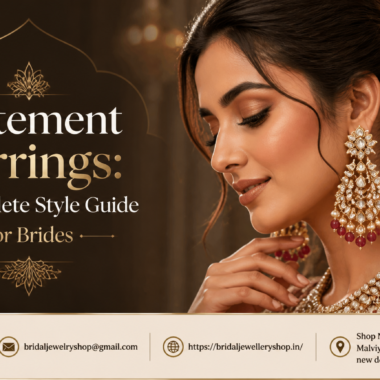
Earrings should answer the necklace, not duplicate it. Chandbalis frame the face and work well with a high or heavily embroidered neckline, while jhumka-style or drop earrings can add movement beside a simpler choker. A maang tikka gives the centre of the head definition, and a hathphool can extend that feeling without requiring a second large necklace. The Maharani Kundan Chandbali and The Royal Kundan Pearl Chandbali earrings are options in the Indian Ethnic range, while mang tikas, hathphools, bangles and kadas complete the broader styling vocabulary. Use the same metal tone and one repeated accent across the set, then check that no two statement pieces sit at exactly the same visual level. A balanced bridal look may use a necklace, earrings and headpiece; a guest look usually needs fewer competing focal points. Keep the maang tikka centred with the parting and the earrings aligned with the jaw rather than the widest part of the dupatta.
4. Occasion Guide: Styling for the Bride vs. the Wedding Guest
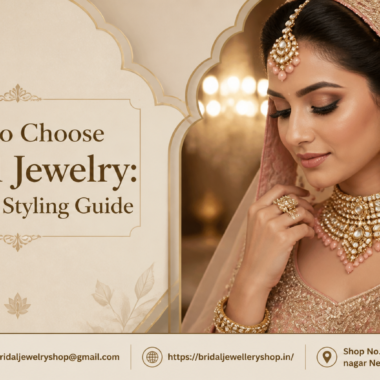
For the bride, the jewellery should feel ceremonial without competing with the lehenga’s craftsmanship. A kundan or polki bridal set works well as the main layer, supported by chandbalis or a maang tikka and coordinated bangles; contrasting emerald or pearl accents keep a red outfit from becoming visually flat. If the blouse is heavily detailed, reduce one element rather than adding more: keep the statement necklace and choose quieter earrings, or let the earrings lead and use a simpler haar. Bridal Jewelry Shop’s Indian Ethnic range includes complete sets and separate mang tikas, hathphools, bangles and kadas, allowing the final combination to follow the outfit rather than a fixed formula. Bring the lehenga and blouse to the Malviya Nagar store for an in-store bridal styling consultation. Walk-ins are welcome, and staff can suggest how to match the pieces to the actual neckline, embroidery and drape.
A wedding guest should create a polished focal point without looking like the bride. Statement earrings with simple bangles, a delicate necklace with a maang tikka, or one coordinated kundan-inspired set can each work, depending on the guest’s role and the outfit’s detail. For festive events, contrast is especially useful: emerald or pearl pieces stand clearly against red, while a bold lehenga can be balanced with a lighter dupatta. Brides and wedding attendees in Delhi NCR can also browse Jewellery on Rent; rentals are listed at Rs 2,000 to Rs 12,000 for a 2 to 7 day period, and availability is confirmed in-store. The key distinction is proportion: bridal styling can centre on a complete set, while a guest look is usually shorter, lighter or limited to one coordinated group of pieces. Choose one focal area—face, neck or wrists—and let the rest support it.
5. How to Balance Your Jewellery with Dupatta Draping and Makeup
Dupatta draping changes the amount of jewellery the eye can see. A broad double drape creates a strong frame around the head and shoulders, so a detailed maang tikka and chandbalis can look powerful while the necklace should remain relatively clean. With a light single drape, a longer haar may remain visible and can be layered more freely. If the dupatta edge is embroidered in green, pearl or dense metallic work, echo one detail instead of introducing several unrelated accents. Check that the dupatta does not cover the pendant, clash with the earrings or pull the hairstyle away from the maang tikka’s line. Before the event, pin the dupatta in its final position and rehearse the complete look with the same hair part, blouse and earrings you plan to wear.
Makeup should echo the jewellery palette, not compete with it. With emerald accents, a soft green or smoky neutral eye can connect the face to the set; with pearls, keep the complexion fresh and choose a defined lip rather than several bold colours. A classic red lip works with both warm and cool jewellery, while a deeper berry or nude lip can let a coloured earring become the focus. Repeat the main metal tone in small details such as the hair accessory, eyewear or nail finish only if those elements look intentional. For more outfit-led inspiration, visit the Bridal Jewellery Style Blog, then photograph the finished look in daylight and under indoor lighting. Most importantly, wear the set for a short trial. Sit, walk and lift your arms to check weight and movement, especially with chandbalis, a layered haar or a broad maang tikka. Comfort will show in your posture and expression.
6. Frequently Asked Questions (FAQs)
Can kundan or polki jewellery be styled with a red lehenga? Yes. Both suit a traditional bridal mood; kundan brings detailed colour and texture, while polki offers an uncut-diamond-inspired look.
What materials are used in the Indian Ethnic range? The range is fashion bridal jewellery in kundan-style and polki-style designs, with no purity or certification claims.
Does the jewellery need to be red to match? No. Emerald, pearl, silver-tone or red accents can all work; the best choice depends on contrast, neckline and occasion rather than a strict matching rule.
Which examples should I try first? The Zoya Emerald Kundan Bridal Set offers a green contrast direction, The Rajkumari Pearl Kundan Bridal Set softens the palette, and The Noor Jahan Polki Bridal Set explores classic polki texture.
Can I rent jewellery for a wedding? Yes. Bridal Jewelry Shop offers Jewellery on Rent and Bridal Lehenga on Rent for Delhi NCR brides and wedding attendees; rentals are available in-store, and the site lists pan-India delivery.
What is the rental pricing model? Rentals are listed at Rs 2,000 to Rs 12,000 for a 2 to 7 day period.
Are custom or made-to-order bridal pieces available? No custom or made-to-order bridal jewellery is offered.
How can I get styling help? Walk into the Malviya Nagar store with the lehenga, blouse and planned dupatta for an in-store bridal styling consultation, or Contact Our Jewellery Team before visiting. Availability and final selections are handled in-store.
Can the rented set be matched to my outfit? Yes. During the consultation, staff can match Indian Ethnic, Bling Belle Western or rental pieces to the outfit you bring and help you narrow the choice before purchase or rental. Walk-ins are welcome.
Conclusion: Your Red Lehenga, Your Style
Red lehenga jewellery works best when the colour, metal and scale support one another. Gold-toned kundan and polki styling create a traditional note; emerald, pearl and diamond-look accents add contrast; neckline and dupatta draping determine how much detail the face and neck can carry. Start with one focal piece, then coordinate only the supporting elements that the outfit truly needs.
Bring the lehenga, blouse and planned dupatta to Bridal Jewelry Shop’s Malviya Nagar store in New Delhi for personal trend-and-matching advice, then select pieces to purchase or rent. The most memorable combination is not necessarily the heaviest one—it is the one that feels coordinated, comfortable and unmistakably yours.